
Visit
Picture this: you're standing in the parking lot of a gun range for the first time, maybe a little unsure of what happens once you walk through that door. You're not alone, many first-time visitors feel the same way, and most of them walk out thinking, "That was way easier than I expected." The experience follows a predictable structure, and knowing that structure in advance makes everything more comfortable from the moment you check in.
Whether you're a new gun owner, someone working toward a concealed carry permit, or just curious about the sport, this guide covers everything you need to know before your first session. Many shooters use USA Gun Range Directory to search, compare, and read reviews on facilities before they visit, which takes a lot of the guesswork out of choosing where to go. By the end of this article, you'll know exactly what type of range fits your goals, what to bring, what to expect when you arrive, and how much to budget.
Indoor vs. outdoor: which type of shooting range fits your situation
Not all shooting ranges are the same, and the first decision you'll make is choosing between an indoor facility and an outdoor one. This isn't just a matter of preference; the type of range you choose determines what firearms you can use, how far your targets will be, and whether weather affects your plans.
What sets indoor gun ranges apart
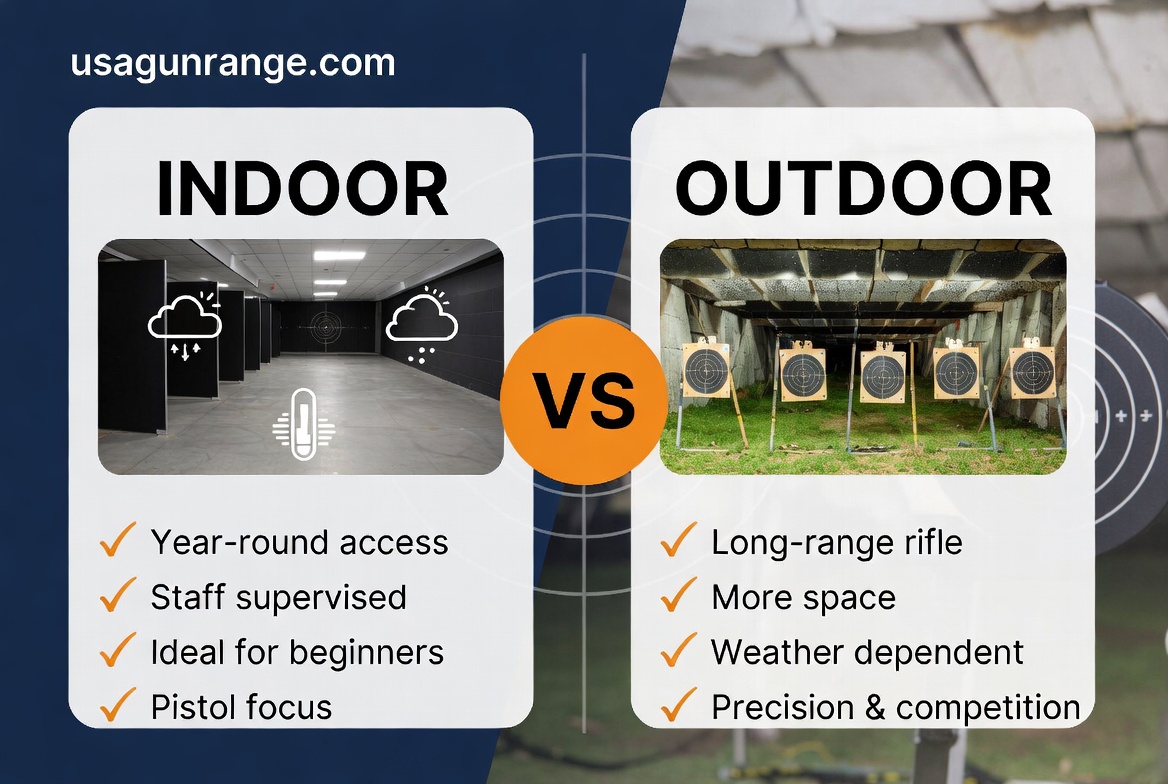
Indoor shooting ranges operate in enclosed bays with climate control, which means you can shoot year- round regardless of weather. These facilities use specialized ventilation systems to manage lead particles and fumes, making air quality manageable even during busy sessions. Most indoor ranges focus on pistol calibers and some common rifle rounds. High-powered rifle cartridges are often restricted due to backstop limitations. Because sound bounces off walls and ceilings, noise levels are amplified indoors; quality ear protection isn't optional, it's essential.
For first-timers, indoor ranges are often the better starting point. The controlled environment, on-site staff, and supervised lanes make it easier to focus on fundamentals, things like grip, stance, and trigger control, without distraction.
Why outdoor ranges attract certain shooters
Outdoor ranges offer something indoor facilities simply can't: space. Target distances typically run from
50 yards out to 300 yards or more, making them ideal for rifle practice, precision shooting, and disciplines like 3-gun competition. Caliber restrictions are generally more relaxed at outdoor facilities because open- air backstops can handle more powerful rounds. The tradeoff is weather dependence; outdoor ranges in northern states may close seasonally, and a rainy afternoon can cut a session short.
Specialty and niche facilities worth knowing
Beyond the indoor/outdoor split, some facilities specialize in specific shooting activities. CCW qualification ranges offer the required live-fire component for concealed carry certification. Virtual simulator ranges use laser or projection technology for training scenarios without live ammunition.
Competition venues host USPSA, IDPA, and practical shooting matches with dedicated stage bays. The term "gun range" covers a broad category, and finding the right fit depends on knowing what you actually want to do when you get there.
What actually happens at a gun range when you walk through the door.
The check-in process at most firing ranges is straightforward, and the staff is accustomed to first-timers or shooters looking to build experience.
There's no assumed knowledge, no secret handshake. Show up, follow the process, and the staff will guide you through the rest.
Trust me when I tell you it's less John Wick in gun ranges than your are expecting!
Check-in, waivers, and the safety briefing
At the front desk, you'll present a government-issued photo ID, sign a liability waiver, and complete a brief safety orientation. Most ranges require this from every first-time visitor regardless of experience level.
The briefing covers range commands, lane rules, how to handle firearms on the property, and emergency procedures. Paying close attention here is the most important thing you can do before you step onto the floor.
Getting to your lane and working the equipment
Once checked in, a staff member or range safety officer will show you to your lane and walk you through the basics: how the target retrieval system works, where the firing line is, and how to hang or position your target. Range safety officers are present on the floor to answer questions, and asking is always encouraged. Keep the muzzle pointed downrange, handle your firearm only at the firing line, and pay attention to what's happening around you.
Range commands you must know before the first shot
Command | What It Means | What You Should Do |
|---|---|---|
"Hot" | The range is live | You may shoot |
"Cease Fire" | Stop shooting immediately | Stop, set firearm down, step back |
"Cold" | No one may handle firearms | Move forward to check or change targets |
Three common commands govern most sessions on a live-fire range, though terminology can vary by
facility, so listen carefully during your safety briefing. "Hot" means the range is active and you may shoot. "Cease fire" means stop immediately, set the firearm down, and wait for further instruction. "Cold" means all firearms must be set down and no one may handle them; this is when shooters move forward to check or change targets. Following these commands without hesitation is the most fundamental rule of range safety, and every shooter, beginner or veteran, is held to the same standard.
Safety rules and range etiquette every shooter follows
Safety rules at a shooting range aren't suggestions. They exist because firearms are powerful tools, and consistent habits are what keep every person on the range safe. Experienced shooters follow these automatically; newcomers need to know them before stepping onto the firing line.
The four universal firearm safety rules
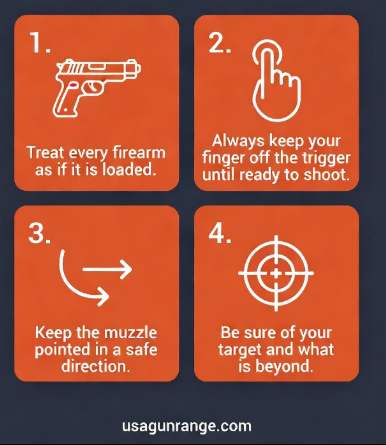
These four rules apply everywhere, on every range, with every firearm:
Treat every firearm as if it is loaded, even when you know it isn't
Never point the muzzle at anything you are not willing to destroy
Keep your finger off the trigger until your sights are on target and you are ready to fire
Know your target and what is beyond it
Most ranges enforce these rules consistently. Serious violations, especially pointing a firearm in an unsafe direction, are frequently grounds for immediate removal from the facility. Specific enforcement policies vary by range, but the underlying expectations are universal. For an example of a typical facility's published expectations, see these range safety rules.
Range-specific conduct and prohibited behaviors
Beyond the universal rules, each facility posts its own prohibited behaviors. Common restrictions include: shooting at non-approved targets, crossing the firing line during a cold range, using restricted ammunition like tracer, steel-core, or armor-piercing rounds, and drawing from a holster unless the range explicitly authorizes it. Most ranges prohibit alcohol and intoxicating substances on the premises, check the specific facility's posted rules to confirm their policies before you arrive.
Dress code and required protective gear
Eye and ear protection are mandatory on any active firing line. Closed-toe shoes are commonly required as well; sandals and flip-flops are a liability risk at most facilities. Many ranges restrict tank tops and open-collar shirts because hot brass ejected from semi-automatic firearms can land on exposed skin and
cause burns or dangerous reflexive reactions. Long pants, a collared or high-neck shirt, and a hat or cap give you comfortable, practical coverage for any range session.
Rentals, classes, and services available at most ranges
Most shooting ranges offer more than just a row of lanes. Instruction, firearm rentals, and membership options sit alongside the shooting bays themselves, making it practical for both first-timers and returning shooters to get more out of every visit.
Firearm and ammo rentals for walk-in visitors
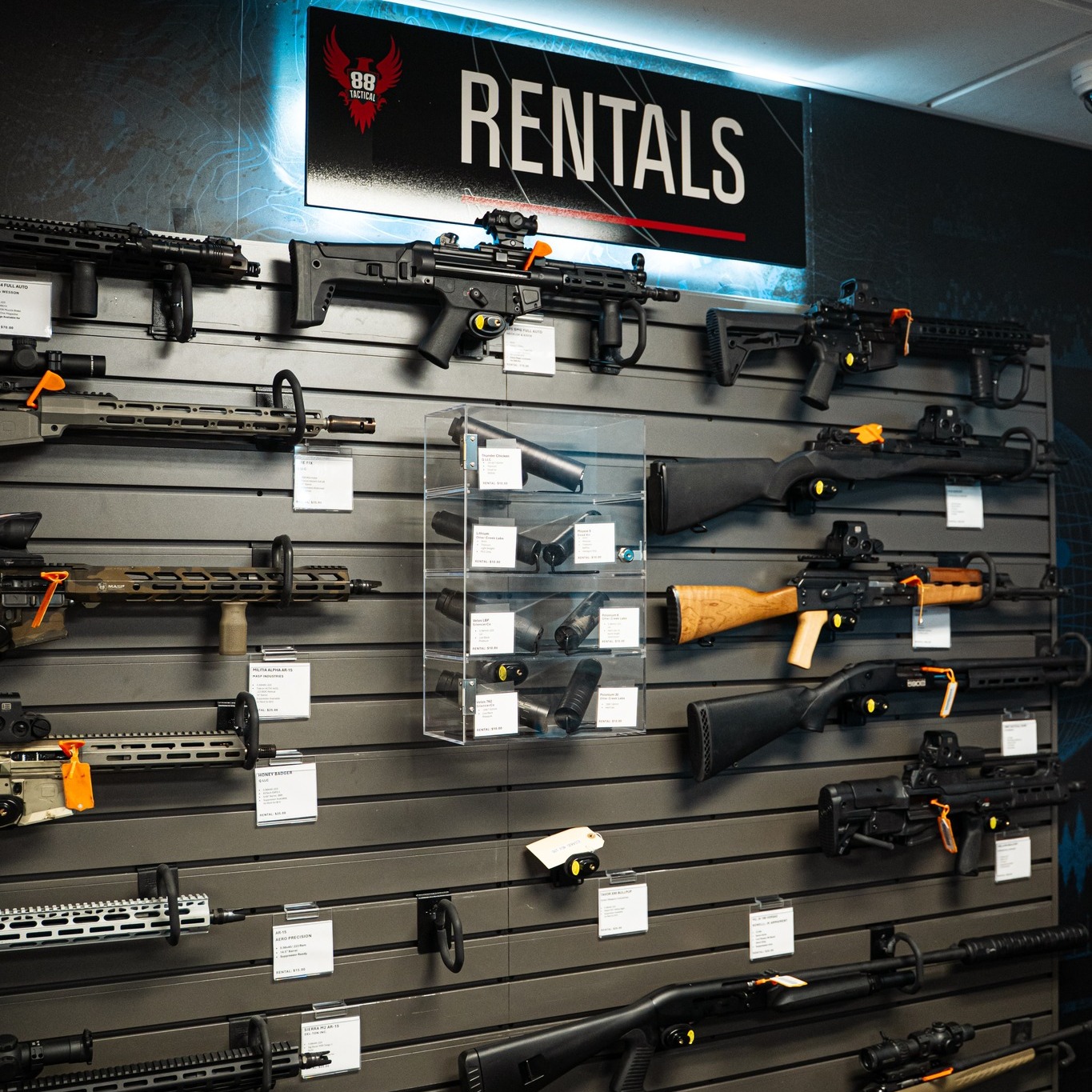
Image from: 88 Tactical in Omaha, Nebraska
If you don't own a firearm, rental inventory covers common handguns, rifles, and sometimes shotguns.
You select a firearm from the display, pay the rental fee, and purchase ammunition at the counter. Many ranges require you to use their ammo when shooting a rental gun; this is a liability and safety policy, not a money grab, though it's always worth confirming the specific range's rules in advance. Rental options are a great way to try different calibers and platforms before deciding what you might want to buy.
Beginner classes and instructor-led sessions
Group beginner courses typically run 60 to 90 minutes and cover grip, stance, trigger control, and sight alignment before moving into live-fire practice. Private one-on-one instruction offers more personalized feedback and moves at your pace. CCW courses often bundle the classroom portion and range qualification into a single session , which saves time and gives you a structured path toward your carry permit. Ask the front desk what's available; most ranges keep at least a basic intro class on a regular schedule.
Membership plans and whether they make sense early on
Range memberships typically include discounted or unlimited lane time, reduced rental rates, priority booking, and sometimes guest passes. They make financial sense for shooters who visit regularly, usually twice a month or more. For a first-timer, visiting two or three times as a walk-in before committing to a membership is the smarter move. You want to confirm the range fits your goals, your schedule, and your preferred shooting style before locking in a recurring cost.
What a first visit realistically costs
One of the most common questions from first-timers is simply, "How much is this going to cost?" The answer depends on your location and the facility, but the cost structure is consistent across most U.S. ranges. Prices below reflect typical figures, local rates may differ, so it's worth confirming with the specific range before you go. If you're ever curious how that compares to building a private setup, see this
overview of typical in-home gun range costs.
Breaking down the main line items
Here's a practical breakdown of what to expect:
Range entry fee: $15, $25 per person
Lane rental: $20, $35 per hour for the first shooter
Firearm rental: $20, $35 per gun
Ammunition: $20, $40 or more depending on caliber
Eye and ear protection rental: $2, $10 if you don't bring your own
Beginner class add-on: $25, $50
A first-timer renting a firearm, buying ammo, and paying for lane time should budget $75, $150 for a solo session. Adding a beginner class or extra ammo pushes that toward the higher end.
How to keep costs reasonable on the first visit
Bring your own eye and ear protection; even a basic set saves you the rental fee and gives you gear you'll use every time. Starting with a 9mm or .22LR rental keeps ammo costs lower than heavier calibers. Many ranges offer first-timer specials or discounted intro packages, so it's worth asking at the front desk before you pay full walk-in rates.
How to find the right gun range for your specific needs
Not every facility is the right fit for every shooter. A competitive pistol shooter has different priorities than a first-time gun owner or a parent looking for a youth program. Knowing what to filter for before you start searching saves time and leads to a better experience.
What to look for when comparing facilities
Start with the basics: distance from home, indoor or outdoor access, and whether the range offers firearm rentals if you don't own a gun yet. From there, look at whether the staff has a reputation for being beginner-friendly, whether classes are available, and what caliber restrictions apply. Checking online reviews and confirmed facility details, lane count, maximum yardage, hours of operation, before you drive out is always worth the five minutes it takes.
Using USA Gun Range Directory to search and compare
USA Gun Range Directory, Find Shooting Ranges Near You is designed specifically for this kind of search.
While general platforms like Google Maps or Yelp can surface nearby results, they aren't organized around the details that matter to firearm users. USA Gun Range Directory categorizes facilities by type, indoor ranges, outdoor ranges, CCW course providers, gun rental facilities, youth programs, and competition venues, so you're filtering by what actually matters to your search from the start.
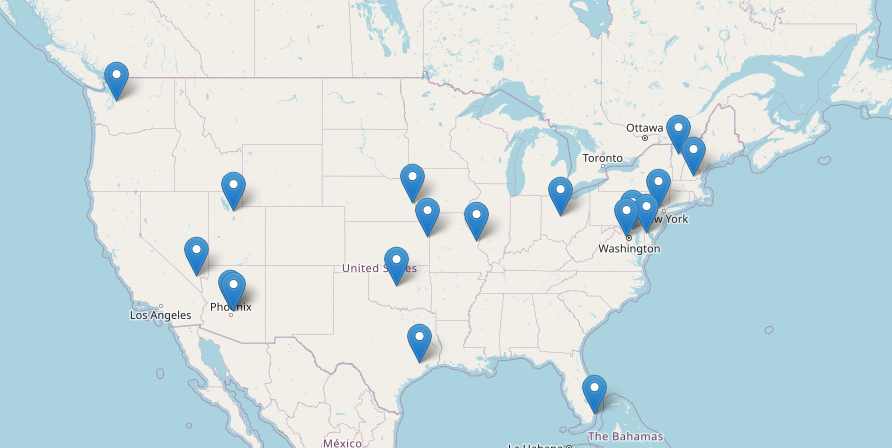
The interactive national map lets you search by state, city, or category to browse verified facilities near you, read community reviews, and compare details before you book. Whether you're a first-timer looking for a beginner-friendly indoor facility or an experienced shooter hunting for a competition venue in a new city, the directory gives you a clear, organized starting point. Head to USA Gun Range Directory, Find Shooting Ranges Near You and use the searchable map to find a gun range near you today.
You're more ready than you think to visit a gun range
A gun range visit follows a predictable structure, and showing up informed makes the whole experience smoother, safer, and more enjoyable. You now know the difference between indoor and outdoor facilities, what to expect from check-in through your first shot, the safety rules every shooter follows, the services available beyond the shooting lane, and a realistic budget to plan around.
Every experienced shooter was once exactly where you are right now. The learning curve is real but short, and the range community is generally welcoming to newcomers who show up prepared and respectful.

The hardest part is usually just deciding to go, so use USA Gun Range Directory, Find Shooting Ranges Near You to browse nearby options by category, find the right fit, and show up with confidence.