
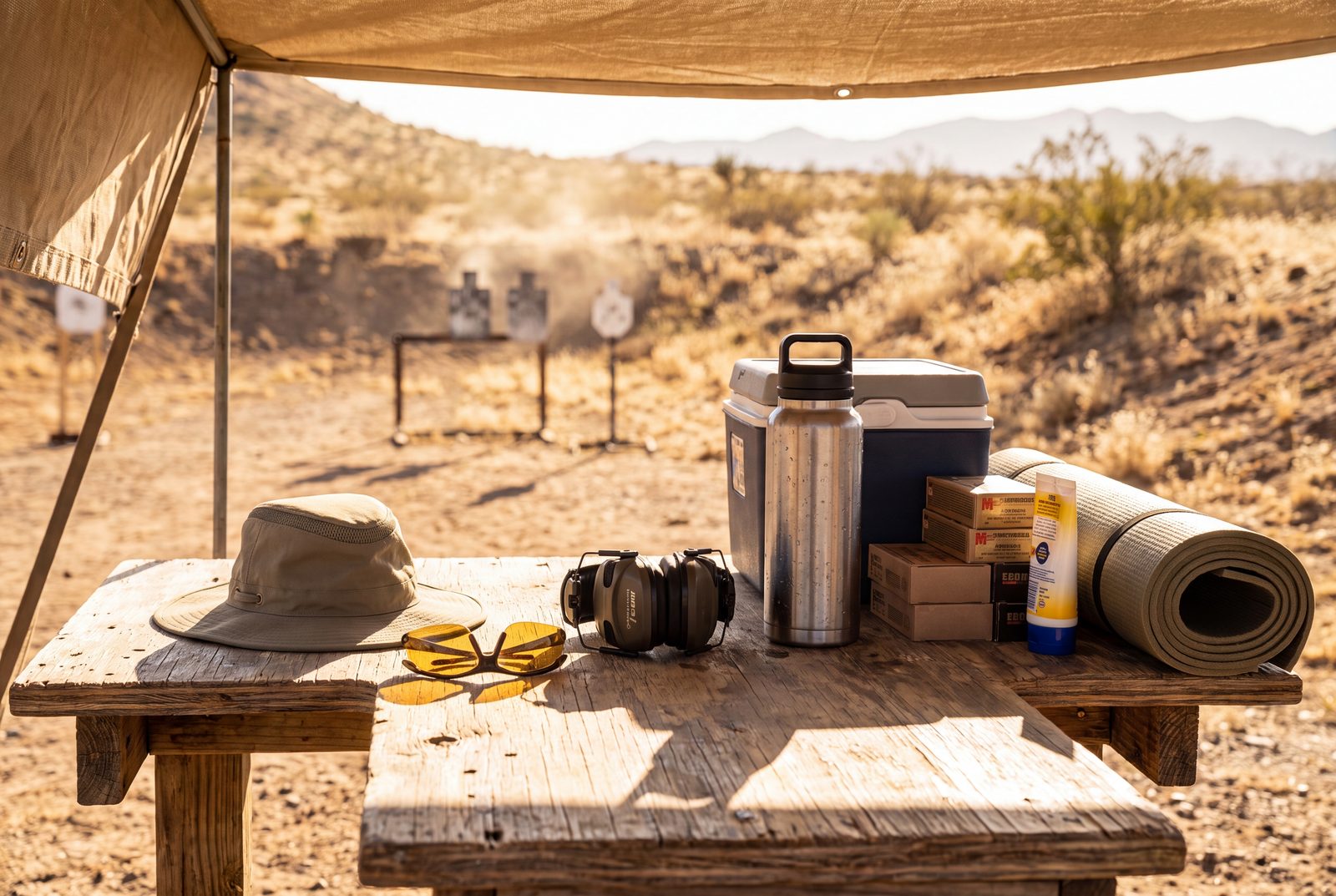
Summer is peak range season. The days are long, the outdoor bays are open late, and a lot of new shooters buy their first firearm and want to go practice. That’s all good — but heat quietly changes the safety math in ways a lot of shooters never think about until they’re lightheaded on the firing line with a loaded gun in their hands.
I’ve run hot lines. I’ve watched a strong, fit shooter go from cheerful to gray-faced in under an hour because he skipped water and wore a black t-shirt in full sun. Heat doesn’t announce itself politely. So before we talk gear, let’s talk about the person holding the gun — because a distracted, overheated shooter is the single most dangerous thing on any range.
The four universal safety rules don’t take the summer off. Treat every firearm as if it’s loaded, keep your finger off the trigger until your sights are on target and you’ve decided to fire, never point the muzzle at anything you’re not willing to destroy, and know your target and what’s beyond it. Heat makes people sloppy and impatient, and sloppy plus a firearm is exactly the combination those rules exist to prevent.
Why summer changes the range equation
Two things happen when the temperature climbs. First, you get less reliable — dehydration and heat stress erode focus, patience, and fine motor control, which are the exact things that keep you safe and accurate. Second, your gear gets less reliable — ammunition, optics, and lubricants all behave differently when they’ve been baking. A safe summer session means managing both.
Pro Tip: Treat the drive to the range as part of your heat plan, not a break from it. A closed vehicle in the sun heats up far faster and far hotter than the outside air — which matters for both the water you brought and the ammo in the back seat.
Hydration: the part people skip until it’s too late
Here’s the counterintuitive part: by the time you feel thirsty, you’re already behind. Thirst is a late signal. The people who go down on hot ranges are almost always the ones who “felt fine” and planned to drink later.
Federal workplace-safety guidance for people working in the heat is a good template for shooters, because a long range day is physical work in the sun. NIOSH recommends drinking about one cup (8 ounces) of water every 15 to 20 minutes while working in the heat, rather than waiting and gulping a lot at once. Start hydrated before you arrive, and keep sipping on a schedule instead of by feel.
A few practical rules that hold up:
- Water first. For a normal session, plain water is the workhorse. Bring more than you think you need, and keep it in the shade or a cooler so it stays cold enough that you’ll actually drink it.
- Add electrolytes for long, sweaty days. If you’re exerting yourself in the heat for a couple of hours or more, an electrolyte drink helps replace the salt you lose through sweat. Heat illness isn’t only about water — it’s about water and salt.
- Skip the stuff that works against you. Alcohol and very sugary drinks are poor choices in the heat. Save the celebratory beer for after the guns are cased and you’re off the property.
- Don’t overdo it either. More is not infinitely better; guidance for heat work caps intake at roughly 48 ounces per hour. The goal is steady, sensible replacement, not chugging.
Warning: Alcohol and firearms never mix, and that’s doubly true in the heat, when alcohol accelerates dehydration and impairs the judgment the safety rules depend on. If you’ve been drinking, you don’t belong on the firing line — full stop.
Recognizing heat illness on the line
Everyone on a summer range should be able to spot heat illness early, in themselves and in the shooter next to them. A buddy system works — you watch each other, because the person overheating is often the last to notice. Here’s the distinction that matters most:
| Heat exhaustion | Heat stroke (emergency) | |
|---|---|---|
| What’s happening | Body is losing too much water and salt | Body can no longer cool itself; temperature climbs out of control |
| Common signs | Heavy sweating, weakness, dizziness, muscle cramps, nausea, cool/clammy skin | Confusion or altered behavior, very high body temperature, skin that may stop sweating, possible collapse |
| What to do | Stop shooting, unload and case the gun, move to shade or AC, loosen gear, sip water, cool down | Call 911 immediately, move to cool, cool the body aggressively (wet cloths, fanning), do not wait |
Heat stroke is a true medical emergency — body temperature can spike dangerously within minutes, and it can cause permanent harm or death without fast treatment. The single most important firearm-specific step at the first sign of trouble is simple: make the gun safe first. Unload it, case it, set it down pointed in a safe direction. A person who is getting confused or dizzy should not be holding a loaded firearm, and neither should the friend who’s trying to help them.
Pro Tip: Tell the Range Safety Officer the moment you or a buddy feels off. RSOs would far rather pause a line for five minutes than manage a medical emergency. That’s what they’re there for.
Dressing and gearing for heat
Your protective equipment doesn’t get optional just because it’s hot. Eye and ear protection are non-negotiable every time you shoot, summer included. Both major shooting-safety bodies are unambiguous: wear impact-rated eye protection and hearing protection whenever guns are being fired near you.
- Eyes: Wraparound shooting glasses rated to the ANSI Z87.1 impact standard guard against ejected brass, ricochet debris, clay chips, and the rare case rupture. Amber or lightly tinted lenses can cut glare on a bright bay without darkening your sight picture too much. A brimmed hat under or over the glasses keeps sun and hot brass off your face.
- Ears: Muzzle blast is just as damaging outdoors as indoors — open air doesn’t make gunfire quiet. Electronic muffs are excellent in summer because they let you hear range commands and conversation while still clamping down on the shot. Foam plugs under muffs (doubling up) add protection on a busy line.
- Skin and clothing: Loose, lightweight, light-colored clothing reflects heat and breathes. A wide brim protects your neck and ears. Use a broad-spectrum sunscreen of at least SPF 30 and reapply it — an outdoor bay offers almost no shade, and you’ll be out there for hours.
- Sweat management: Sweaty palms make for a slippery grip, and a slippery grip is a control problem. A towel on your bench, and stippled or textured grips, help you keep a consistent hold. Sweat running into your eyes or fogging your glasses is a distraction you can head off with a sweatband or a quick wipe between strings.
Warning: A metal firearm, a steel bench, and a brass-strewn shooting mat left in direct summer sun get hot enough to burn bare skin. Watch where you set things down, and be careful reaching for a gun that’s been sitting in the sun.
Your ammunition in the heat
This is the question shooters ask most in summer: does heat hurt ammo, and is it dangerous? Here’s the straight answer, grounded in guidance from SAAMI, the body that sets U.S. ammunition standards.
Factory ammunition is tougher than internet rumors suggest — it’s engineered to function from arctic cold to tropical heat, and a single cartridge that cooks off outside a firearm bursts rather than “explodes.” But extended exposure to high heat and humidity can degrade ammunition over time. That degradation usually shows up as lower pressures, incomplete powder burn, or a failure to fire — and occasionally as increased pressure. None of that is what you want when you’re trying to shoot safely and accurately.
SAAMI’s storage guidance is refreshingly plain:
- Keep ammunition in its original packaging or packaging made for the purpose.
- Store it in a cool, dry place, away from heat sources, open flame, solvents, and chemicals.
- Do not leave ammunition in a vehicle or trunk on a hot day. A parked car in the sun becomes an oven, and that’s the most common way everyday shooters cook their ammo without realizing it.
- Store ammo separately from firearms and keep both secured and inaccessible to children and any unauthorized person.
- Inspect before firing. Discard cartridges showing corrosion, deep dents, or other damage. If a round is in doubt, don’t chamber it.
Pro Tip: On a hot range day, keep your ammo in a cooler or in the shade on the bench, not sitting on a black car dashboard or a sun-blasted table. Pull out what you’ll shoot in the next few minutes and leave the rest shaded. It’s a five-second habit that protects both reliability and safety.
One more heat-and-ammo note worth respecting: never fire a cartridge that requires unusual force to chamber, and don’t repeatedly re-chamber the same round. Heat-swollen or damaged cases and repeatedly cycled cartridges are exactly the kind of small problem that turns into a malfunction on a hot, busy line.
Optics, lubrication, and metal in the sun
Your gun’s accessories notice the heat too.
- Optics fog. Move a cold red dot or scope from an air-conditioned car into hot, humid outdoor air and the glass can fog instantly, just like eyeglasses. Give optics a few minutes to acclimate before you need a clear sight picture, and carry a lens cloth.
- Lubrication thins. Gun oil gets runnier as it heats, and on a scorching bench it can migrate away from where you need it or attract more airborne grit and unburned powder. Follow your firearm manufacturer’s guidance for lubrication, wipe down excess, and check that wear points are still oiled during a long session.
- You’ll foul faster. Summer days are long, and long days mean high round counts. More rounds simply means more carbon, more heat, and a dirtier gun by the end of the day — plan to clean it that evening rather than letting fouling bake on.
Warning: Inspect your firearm before you shoot and follow the manufacturer’s instructions — this matters year-round, but heat, dust, and high round counts make a summer pre-check especially worthwhile.
Indoor ranges aren’t automatically safe
Air conditioning solves the sunburn and most of the heat-stroke risk, but indoor ranges bring their own summer wrinkle. They can run warm and stuffy when they’re crowded, ventilation works harder in summer, and you can still get dehydrated standing in a stuffy bay for two hours. Bring water indoors too, take breaks, and don’t assume “indoors” means “hydration doesn’t matter.” Follow the facility’s rules and the RSO’s commands exactly as you would outside.
Time your trip and pace the session
You can eliminate a lot of heat risk before you ever load a magazine, just by choosing when you shoot. The sun and heat peak in the middle of the day, so an early-morning or late-evening session at an outdoor range is dramatically more comfortable and safer than high noon in July. If a midday trip is unavoidable, shorten it, build in shade breaks, and slow your round count.
Pacing matters more than most shooters realize. On a cool spring day you might run a long, steady string without thinking about it. In real heat, that same pace stacks fatigue, dehydration, and a hot firearm all at once. Break the session into shorter blocks with water-and-shade breaks between them. Those breaks are also a natural moment to check your gun, top off hydration, and reset your focus — all of which make you both safer and a better shot.
Pro Tip: Watch the people who need the most margin. New shooters, kids in a supervised setting, older shooters, and anyone on medication that affects hydration or heat tolerance will feel the heat sooner and harder. If you’re the most experienced person there, you’re also the one responsible for calling a break before someone’s in trouble.
Putting it together
None of this is complicated, and none of it should keep you home. Summer is a fantastic time to shoot. The shooters who have a great, safe hot-weather session are simply the ones who planned for the heat: they arrived hydrated, drank on a schedule, dressed for the sun, kept their ammo cool and shaded, gave their optics a minute to adjust, and watched out for the people next to them. Do those things, keep the four safety rules front of mind, and the heat becomes a background condition instead of a hazard.
Frequently Asked Questions
Is it bad to leave ammunition in a hot car?
Yes, as a habit. Factory ammo tolerates a wide temperature range, but SAAMI specifically advises against leaving ammunition in a vehicle or trunk on a hot day, because a parked car gets far hotter than the outside air and extended heat exposure can degrade the powder and primer over time. Keep ammo cool, dry, and shaded.
What temperature is too hot for ammo?
There’s no single magic number for a stray warm afternoon — factory ammunition is built to function across a very wide range. The real risk is extended exposure to high heat and humidity, which can cause failures to fire, incomplete burning, or pressure changes. The practical rule from SAAMI is to store ammunition in a cool, dry place and avoid prolonged heat, rather than chasing a specific cutoff temperature.
How much water should I drink at the range in summer?
Federal heat-safety guidance suggests about one cup (8 ounces) of water every 15 to 20 minutes during physical activity in the heat, starting before you feel thirsty. Add an electrolyte drink for long, sweaty sessions, and don’t rely on thirst as your cue — it shows up too late.
Can you get heat stroke at an outdoor shooting range?
Absolutely. Standing on an unshaded firing line for hours in the sun is physically taxing. Watch for heavy sweating, dizziness, weakness, and nausea (heat exhaustion), and treat confusion, very high body temperature, or collapse as a heat-stroke emergency — make the firearm safe, call 911, and cool the person immediately.
Does heat affect a red dot or rifle scope?
The most common summer issue is fogging when you move optics from a cold, air-conditioned space into hot, humid air. Let your optic acclimate for a few minutes and keep a lens cloth handy. Quality optics tolerate heat well, but abrupt temperature swings cause condensation.
Why does my gun seem to get dirtier in the summer?
Mostly because summer sessions are longer and you shoot more. Higher round counts mean more carbon and fouling, and hot, thin lubricant can attract airborne grit. Follow your manufacturer’s lubrication guidance and plan to clean the firearm the evening after a big day.
Do I still need eye and ear protection outdoors?
Yes. Open air does not make gunfire safe for your hearing, and ejected brass and debris are just as much a hazard outdoors. Wear ANSI Z87.1-rated eye protection and hearing protection every time, indoors or out.